


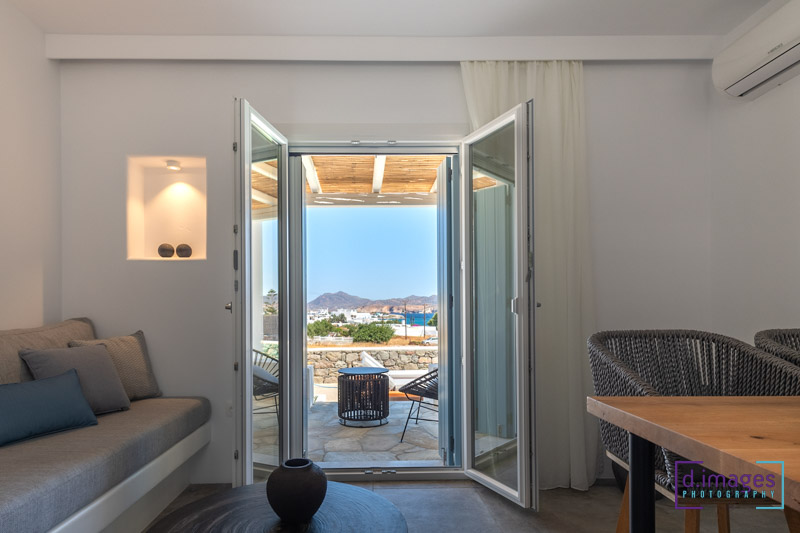
A beautiful property can create a strong first impression. But a memorable guest experience depends on more than attractive interiors.
3Thoughtful layouts, durable materials, comfortable lighting and practical details all contribute to how a property feels and functions.
4Whether you're planning a small hotel, a villa or a holiday apartment, successful design requires a balance between visual identity, guest comfort and day-to-day operation.
5Start with the Property's Identity
6Before selecting furniture and colours, consider what makes the property distinctive.
7Its architecture, surroundings, natural light and intended guests should all inform the design.
8A property in the Cyclades, for example, might draw on natural textures, simple architectural forms and the surrounding landscape without relying on predictable decorative themes.
9The aim is to create a coherent identity that belongs to the property itself.
10Put Practical Layouts First
11A guest room may look impressive in photographs yet be uncomfortable to use.
12Furniture placement, circulation, luggage storage, bedside access and conveniently positioned power outlets all deserve careful consideration.
13Small decisions make a difference. A useful place to put a suitcase, a well-positioned mirror or a comfortable reading light can improve the experience considerably.
14These details are easiest to resolve when they are included early in the design process.
15Choose Materials for Real-World Use
16Hospitality interiors experience different levels of wear from private homes.
17Furniture, surfaces, fabrics and fittings need to perform well under regular use and cleaning.
18This doesn't mean sacrificing design quality. It means understanding how each finish behaves in its intended environment.
19Bathrooms, humid areas and outdoor spaces exposed to sunlight and sea air require particular attention.
20Appropriate material selection can help reduce unnecessary repairs and replacement over time.
21Design Lighting Around Guest Comfort
22Lighting affects both atmosphere and usability.
23Bedrooms benefit from a combination of general lighting, bedside reading lights and softer options for relaxation.
24Bathrooms need functional lighting near mirrors, while shared areas require a balance between visibility and ambience.
25Rather than selecting fixtures for appearance alone, consider how guests will use each space throughout the day and evening.
26Plan Furnishing and Equipment Together
27Furnishing a holiday property involves much more than selecting beds and sofas.
28Lighting, appliances, textiles, fittings and essential equipment all need to work together.
29Furniture, fixtures and equipment (FF&E) should be planned against a defined budget, realistic supplier options and delivery schedules.
Sections Plugins Cover About Us Services Description Steps Schedule Features Pricing Table Pricing List Testimonials Team Counters FAQ Call To ActionFAQ – Designing Hospitality Properties
What should come first when designing a holiday property?
Start by assessing the property, guest needs and operational requirements. These considerations guide the layout, materials and furnishing choices.
How can a small holiday rental stand out?
Through efficient use of space, thoughtful lighting, practical furniture and a consistent design identity.
Which materials work best in hospitality interiors?
Materials suited to the expected level of use, cleaning and maintenance. The right specification depends on the individual space and its conditions.
When should furniture and equipment be selected?
Ideally during the design stage, so dimensions, technical requirements, budgets and delivery times can be coordinated.
Can a holiday property be refreshed without a full renovation?
Yes. Depending on its condition, improvements to lighting, furniture, textiles and selected surfaces can make a meaningful difference to both appearance and functionality.
Planning a New Hospitality Property or Renovation?
Contact us to discuss your property's needs and the possibilities for your project.